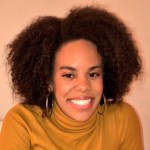
On any given weekend in Atlanta, you might find dozens of Black residents hiking Arabia Mountain, kayaking along the Chattahoochee River, or gathered around a campfire sharing stories. At the center of it all is Taylor Crenshaw and her organization Peace in the Wild, which she started to get Black people into the outdoors.
“Peace in the Wild reconnects the diaspora to nature — that’s what we do,” Crenshaw said.
Transforming how Black people experience the natural world, Crenshaw started the organization in 2021 operating outings in and around Atlanta and aspiring to reach global communities.
The group’s offerings include monthly excursions, skill-building workshops, conservation efforts, and community outreach. From kayaking to forest cleanups and swim lessons to camping retreats, Crenshaw believes that Peace in the Wild presents the outdoors not as an intimidating place but as a space that welcomes every identity, every body, and every backstory.
She said that over the past five years, the organization has hosted around 100 experiences, each one acting as a chance to change how Black people interact with the outdoors. Crenshaw said so far over 5,000 community members have participated in the group’s events.
As a child, Crenshaw was immersed in nature and had a passion for the environment. Growing up in Milwaukee, she was raised by her mother and two grandmothers who kept gardens. She also attended an environmental elementary school. She said she learned how to build greenhouses and to canoe, and she attended summer camps focused on outdoor education.
Yet even those early experiences carried complexity. Attending summer camps, she was often the only Black girl there.
“Being the only Black girl at a summer camp that you’re staying at for about two weeks was just like a slightly traumatizing experience,” she said. “While nothing physically happened to me… it does something to your mental… like I don’t see myself in this space.”

After moving to Atlanta 15 years ago to attend Clark Atlanta University, Crenshaw fell in love with the city. She built a career in marketing, working with brands like Chick-fil-A and Delta Air Lines. But as adulthood took over, her connection to the outdoors faded.
“I can say, honestly, I lost touch, as most of us do, with our childhood passions,” she said.
When the pandemic shut down the world in 2020, nature remained open. For Crenshaw, it became a reset.
“2020 was probably the restart and the reconnection,” she said. “Especially for Black people, we are not connecting with nature for our first time. … we are reconnecting with nature.”
She began venturing outside alone but then she began inviting friends to join her. On a whim, she posted a montage on TikTok showing Black people kayaking and rock climbing and encouraging them to enjoy the outdoors. By morning, she said it had gone viral.
“I had so many emails. … People were like, ‘Hey, can I join you?’”
Peace in the Wild was born from that demand.
Since then, the Atlanta-based organization has hosted events including whitewater rafting, surfing, yoga sessions, rock climbing, hikes and more. But Crenshaw is quick to clarify what sets the space apart.
“Peace in the Wild is not a networking opportunity. This has nothing to do with capitalism. This has nothing to do with professionalism,” she said. “Peace in the Wild is a space for you to come and be whoever you need to be in this moment and find peace in the chaos of this world.”
“Nature doesn’t care about your skin color. It doesn’t care about your occupation,” she said. “Nature just allows you to exist.”
Crenshaw said the organization handles logistics and gear coordination so participants can “just register and show up,” lowering barriers that often make outdoor recreation feel intimidating or inaccessible.
“Our youngest member is an infant. Our eldest is around 80 years old,” Crenshaw said. “There is an activity for every age, every gender, every ability.”
While kayaking trips may draw attention on Instagram, one of Crenshaw’s proudest achievements is the organization’s education pillar.
Peace in the Wild operates through three core focuses: education, outdoor recreation, and stewardship.
Its first formal skill-building initiative was a six-week swim program designed to address disparities in swimming in the Black community where participants commit to weekly sessions with certified instructors.
“We have successfully seen everyone swim to the deep end by week six,” Crenshaw said.
Upcoming workshops include herbalism education, growing and homesteading, and firearm safety, all practical skills Crenshaw believes are essential but often inaccessible.
“My goal again is to touch on what is a need within our community,” she said.
The stewardship pillar reinforces environmental responsibility through cleanups and partnerships with conservation spaces like Arabia Mountain and the Chattahoochee River.
“I think a lot of people want to take from nature, but rarely do we pour back into it,” she said.

Jalyssa Woodall said she had long-standing fears about going into pools or other bodies of water, stemming from a family tragedy.
“One of the first deaths I experienced as a young child was when my godbrother passed away. He drowned as a little boy, and ever since then, as calming and as peaceful as water can be, [it] is one of those things that I kind of kept at arm’s length,” Woodall said.
But after participating in and completing Peace in the Wild’s swimming program, she’s now experiencing a new found love for water.
“It was all because I took these classes. They were patient and encouraging and after the classes were done, I was so excited. My apartment pool, which I never used — I was in there every week. I’m excited to keep swimming,” Woodall said.
She started attending Peace in the Wild events back in 2024 after she discovered the organization on social media. After moving to Atlanta from Chicago, she said the organization was her path into meeting new people and getting acquainted with the city.
So far she has participated in 11 events and plans to attend more.
“Not only have I been able to learn these amazing skills and have these great shared experiences, but I’ve been able to find community,” Woodall said.
Through the five years that Peace in the Wild has operated, Crenshaw said she has watched strangers become best friends and she’s seen community members overcome trauma associated with swimming or hiking alone. Some have even met life partners through events.
At a recent camping trip, participants gathered for a reflection circle. “We had a lot of people just get up during the sharing circle, and say, ‘Hey, I’m not OK. Can somebody give me a hug?’”
Moments like that affirm her belief that Peace in the Wild is bigger than recreation.
“Peace in the Wild is transformative. It’s life changing. It’s home to a lot of people,” she said.
After deciding to spend the holiday season in Atlanta, rather than going home to Chicago, Woodall said one of the friends she made at Peace in the Wild invited her to spend the holidays with her and her family.
“When I say I had the best time — if you look at the pictures, all you see is teeth. I’m just laughing and smiling. We played games, we ate food, I connected with her family and her friends and now me and this young woman are still friends,” Woodall said.
She said not only has Peace in the Wild gifted her lifelong friendships, but also a new outlook on life and relationships.
“It has been able to show me, a Black girl from the South Side of Chicago who has experienced some trauma when it comes to relationships, that there is a safe community out there,” she said.
Peace in the Wild has also gone global, recently leading a group trip to Medellín, Colombia, a milestone Crenshaw calls a “1,000 out of 10” experience.
Ultimately, she envisions Peace in the Wild as “a global organization that people can lean on for education, recreation and stewardship.”
For Crenshaw, she wants her work to show that everyone can enjoy the outdoors and deserves to do so in a safe space.
“You have the ability to find peace in the wild, peace in nature, and also peace in the wilderness of your everyday life in this crazy world that we’re living in.”