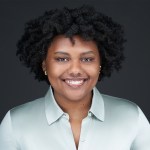
Ester Clark has been living a nightmare for the past 22 years, ever since her grandson Danyel Smith was sentenced to life behind bars for the death of his infant son — a tragedy they both say he did not cause.
“They never tried to find out what really happened,” Clark, 81, told Capital B Atlanta of Smith’s prosecution. “I can’t really explain the hurt and the tears and the heartaches and pain that I’ve been through over the years. … It’s just horrible.”
Smith was convicted of murder by a Gwinnett County jury in 2003 based on the theory that his 2-month-old son Chandler’s death the year prior was caused by abusive head trauma, more commonly known as shaken baby syndrome.
The Supreme Court of Georgia is now deciding if Smith, who rejected a 2022 plea deal that would’ve sent him home, will get a new trial based in part on an updated scientific understanding of shaken baby syndrome that largely undercuts the theory presented by the prosecution at trial.
Dr. Steven Dunton, the prosecution’s medical examiner who testified in 2003 that Chandler’s skull fracture occurred on the day he became non-responsive, reversed his previous testimony last year, claiming he now believes it is likely that the fatal injury was sustained earlier because it was already showing signs of healing.
“They owe Danyel a whole lot,” said Latasha Pyatt, Smith’s fiancée. “They will never be able to repay him for the time that he’s lived away from his children and away from his family and what he’s seen in that place and [what] he has endured.”

Compared to children of other races, Black children are disproportionately identified as victims of abuse, according to a 2022 Stanford University study.
Marsha Brandon, Chandler’s mother, could not be reached for comment. She told Atlanta News First in 2023 that despite her previous praise of Smith’s attentive parenting, her stance changed to a belief that Smith killed their son and should remain in prison.
Mark Loudon-Brown, an attorney with the Southern Center for Human Rights, became Smith’s lawyer in 2021 and has since been focused on getting Smith a new trial.
A Gwinnett County Superior Court judge dismissed their first motion for a new trial without a hearing, but the Supreme Court of Georgia unanimously ruled in 2022 that Smith be given a hearing.
Smith, who has denied abusing his son in any manner, received a time served plea deal from the Gwinnett County district attorney’s office shortly after the supreme court’s ruling, but he rejected it as he refused to plead guilty.
Loudon-Brown argued during the April 2024 oral arguments that if presented with evidence of the current scientific understanding of shaken baby syndrome, a reasonable juror would have cause for reasonable doubt.
The attorney bolstered his argument via testimony from five doctors, who explained that the diagnostic approach to Shaken Baby Syndrome had changed, allowing for a non-abusive diagnosis today.
Dr. Saadi Ghatan, director of pediatric neurosurgery with the Mount Sinai Health System, testified in 2021 via a sworn affidavit that he would not conclude that Chandler Smith was abused, based on improved imaging technology and studies performed on non-abused babies that showed symptoms formerly used to diagnose shaken baby syndrome. He opined that the infant’s death was caused by pre-existing conditions due to birth injury and other events that don’t include being shaken.
Despite the new expert testimony, Smith was denied a new trial by now-retired Gwinnett County Superior Court Judge Ronnie Batchelor in October 2024. The case then went to the Supreme Court of Georgia for review.
Loudon-Brown argued last month that Judge Batchelor did not properly apply the law governing whether Smith demonstrated that the new evidence entitled him to a new trial. He said the court improperly dismissed the new evidence and expert testimony he presented, resulting in Smith being denied a new trial.
“There are two options: The Supreme Court could send the case back and tell the trial court to apply the correct law, or the Supreme Court could apply the correct law itself and reverse [the lower court’s decision],” Loudon-Brown told Capital B Atlanta. “We’re asking them for the second, but it’s possible they could do either one of them.”
A spokesperson for the Gwinnett County district attorney’s office declined to comment to Capital B Atlanta about the case while it is actively under the Supreme Court of Georgia’s consideration.