To celebrate Black Business Month, Capital B Atlanta is profiling innovative entrepreneurs in Atlanta.
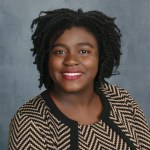
When you walk through the Fickett Farmers Market, operated by Westside Farmers Markets, you’re greeted by Ali Washington.
The 38-year-old’s vibrant energy sets the tone as you take in the spread of fresh, locally made goods, from sea moss and chicken sausage to seafood and seasonal produce.
Washington is the owner and executive director of the market, which proudly features Black-owned vendors. The mission is rooted in increasing access to fresh, affordable food in Ben Hill—a Southwest Atlanta neighborhood officially classified as a food desert, according to the USDA’s Food Access Research Atlas.
“Wednesday is show day. I’m out bright and early at 6 a.m., loading everything out—tables, the kids’ game area, even the portable sink for the porta-john,” Washington told Capital B Atlanta. “All day, I’m tag-teaming the info booth and my tea booth [Soul Food Holistic Healing], helping customers, and when someone’s new, I personally walk them stall to stall to introduce each vendor and what they offer.”

Fickett Farmers Market is the first of its kind in the area and the first to partner with Atlanta Public Schools through Fickett Elementary’s agriculture program. The partnership gives students hands-on experience in entrepreneurship, nutrition, and sustainable living after school.
Washington, who has lived in the neighborhood for six years, takes pride in building a space where community members feel seen, supported, and connected. Capital B Atlanta spoke with her about the APS partnership and what it means to center youth and community in this space. This interview has been edited for clarity and length.
Capital B Atlanta: Why is the market’s location in a food desert so significant to you?
Ali Washington: Growing up, I watched my grandmother do this kind of work. Churches would donate food, drop it off at her apartment, and she’d dish it out to whoever needed it—right from her home. People would knock on the door, say they were hungry, and I’d yell, “Grandma, somebody’s at the door!” She’d say, “All right, y’all sit on the porch—I’ll make y’all a plate.”

When I shop at Publix or Kroger on our side of town, the produce is bad. It’s rotten. If you visit the same stores in more affluent neighborhoods, the food looks totally different. It’s frustrating. I take great pride in making sure our community has access to fresh, high-quality, locally grown produce. That’s what we deserve.
What can people find at your market?
We’ve got Matt’s Seafood Line out of Brunswick: fresh snapper, scallops, salmon, cod, grouper, and halibut. Produce from Eat Right Atlanta. I sell loose-leaf tea through Soul Food Holistic Healing. [There’s] Jr.’s Java Coffee, an autism and disability-owned café.
We carry books, including Black coloring books and children’s titles by Black authors. Culinary Collective brings chicken salad, lemonades, and cakes. Lawton’s makes chicken sausage (no GMO, no preservatives, no pork casing). We have cold-pressed juices from Sister Ebonique’s and healthy desserts from Aromatic Baked Goods. Their cookies are addictive, and the flour they use is from a Black-owned company. We’ve got a lot to offer!
What’s it like owning a farmers market in this community and to work with the school?
It’s not easy. But, at the end of the day, it’s rewarding when people thank me for doing this for the community and feeding the community. I love our people, and that’s why I do it. Being able to pass down [entrepreneurship skills to students] reshapes me, too. It helped bring out my entrepreneurial spirit.
How did the partnership with APS come about?
My daughters go to Fickett Elementary, and they already have an agriculture program. I’d always wanted to do more educational programming through the market, so partnering with the school made perfect sense. It’s right in my neighborhood. We don’t have much over here, so I thought, why not bring something directly to us?
How do you balance it all while having two elementary-school daughters?
I run on minimal sleep and a strict calendar. I pencil in everything—production days on Thursdays and Fridays, and tea market days on Saturdays, Sundays, and some Thursdays. Sticking to a tight schedule is how I make it all work.

What does that partnership look like in practice?
We mainly have students from grades three through five, with parental permission, selling produce they grow. They help run the info booth, learn how EBT and OTC systems work, manage inventory, package items, and even use point-of-sale systems. Everything they sell goes back into their program.
What do you hope people take away from the market beyond the produce?
We’re not just feeding people—we’re educating them. We’re teaching kids and the community how to grow, how to can, how to sustain themselves. This market is about more than food. It’s about legacy. I always tell all my vendors, this ain’t my market, it’s our market because before I make any decisions I include them too.
For this community [Ben Hill], my vision is for us to thrive like Virginia-Highland or Grant Park while keeping our Black essence. Plenty of us share that vision; that’s what I want to see and feel here.
Click here to read more about Atlanta’s game-changing entrepreneurs and learn their secrets to success.