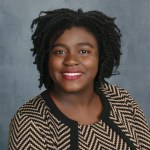
Christina Louma has just one word to describe former President Donald Trump and his supporters’ claims of rampant noncitizen voting leading up to Election Day: “foolishness.”
“I feel like they’re indirectly trying to intimidate us against voting,” Louma, a DeKalb County resident whose parents immigrated to the U.S. 25 years ago, told Capital B Atlanta.
Louma echoes the concerns of Trump critics who say his voter fraud allegations are not only unfounded but also dangerous. With his imminent return to the Oval Office, Trump’s misleading claims could have consequences that extend well beyond this year’s election — especially for Atlanta, which holds the country’s fourth-largest Black immigrant population, according to a 2022 Pew Research Center report.
Lauren Groh-Wargo, CEO of voting rights nonprofit Fair Fight, told Capital B last month in an emailed statement that she anticipates “an avalanche of disinformation” from Trump will continue after all ballots are cast to “rile up his strongest supporters.”
His xenophobic messaging — from false tales of Ohio immigrants eating pets to Georgia noncitizens voting illegally — can influence policy that is harmful to refugees and immigrants both nationally and locally, according to Dorian Crosby, an associate political science professor at Spelman College.
“It can make those who already harbor those thoughts feel even more emboldened to codify them into law,” says Crosby. “If [those policies] are already infused with prejudice, then the outcome is naturally going to be detrimental to those communities that are targeted.”
Trump’s allegations of illegal voting date back to at least 2016, when he declared on X (formerly Twitter) that “millions of people who voted illegally” are responsible for him losing the popular vote to former Secretary of State Hillary Clinton.
He similarly insisted that voting fraud in Georgia cost him the 2020 election against President Joe Biden. That claim was debunked by Ken Block, the data analyst Trump hired to investigate it, according to The Atlanta Journal-Constitution.
An audit released last month by Secretary of State Brad Raffensperger revealed that out of 8.2 million registered voters, only 20 non-U.S. citizens registered to vote in Georgia. While nine of those noncitizens previously cast ballots, 11 were registered but never voted. Election officials canceled their registration and reported them to district attorneys.
“Anybody who is not a citizen typically doesn’t want to go near anything governmental or anything where they have to show their identification,” said Wayne Kendall, a Fayetteville-based attorney specializing in civil rights.
Still, misinformation continue to spread, at times fueled by deceptive actors.
In a widely circulated video posted to X last month, a man who claimed to be a Haitian immigrant said he voted for Vice President Kamala Harris in Gwinnett County and planned to do so in Fulton County as well. He stated that he arrived in the U.S. earlier this year and became an American citizen.
State and federal officials indicated that the video was likely created by Russian propagandists attempting to undermine confidence in the election.
“It’s … intimidating to anyone who is a citizen who has been naturalized that may cause them to think, ‘There may be some glitch in my paperwork, therefore, I better not go forward and vote,’” said Kendall.
Crosby says the xenophobic rhetoric of Trump’s campaign will likely cause people who share his views to be more vocal about their bigotry, and for immigrants to experience an anxiety akin to how many felt during his first presidential term.
“People who were already harboring prejudice and disdain for people who do not have a citizenship status in the U.S. … it has made it acceptable to express those sentiments,” she said.
While Fair Fight Communications Director Max Flugrath urges people to verify information before sharing it, Crosby adds that addressing misinformation in real time can help to prevent its spread.
“If you know that someone is saying something that is erroneous, speak up,” she said. “It can just be a simple correction like, ‘I don’t think that’s quite right, friend.’”
Alyssa Johnson contributed additional reporting to this story.