Amid the current political climate where it has become even more difficult to be Black and trans in the South, the Solutions Not Punishments Collaborative, known as SnapCo, are finding ways to carve out joy and normalcy for Atlanta’s community of queer people of color.
Formed in 2013 out of an alliance between the Racial Justice Action Center, LaGender, Women on the Rise, and Trans(forming), SnapCo was designed to support Atlanta’s trans and queer residents.
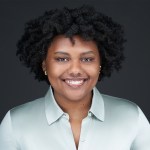
“Organizing is hard. But being able to take care of folks and invest in the leadership [of our people] are big priorities inside of our organization,” said Toni-Michelle Williams, SnapCo’s executive director.
Though SnapCo is a relatively small operation, averaging four to six staff members, it has had a hand in some of Atlanta’s most transformative justice moments over the past decade.
Bridgette Simpson, co-founder and executive director of Barred Business, credits SnapCo’s efforts for moving forward major justice initiatives.
“The footprint for so many things in Atlanta is from SnapCo, like marijuana [decriminalization], [ending] cash bail and pre-arrest [diversion],” Simpson told Capital B Atlanta.
Simpson’s organization, focused on building economic and social power for justice-impacted people, also grew out of the Racial Justice Action Center that helped to birth SnapCo.
“I think it’s super important for folks who are from [the trans community] to be able to speak on their particular issues,” she said.
Williams is very aware of the role she plays to keep trans and queer people visible and centered when it comes to justice work and social movements.
“I always say that we do so much because so much is required to keep our people safe,” she said. “I’m a Black trans woman who’s been transitioning for over 15 years, and who was born and raised in Atlanta. But everywhere I’ve been, the requests for support are the same. Folks need housing, economic stability, safety from police, safety from violence within family dynamics.”
Deshaneir King, a nonbinary organizer and the communications manager at Women on the Rise, another of the organizations that helped to form SnapCo, described the nonprofit as a testament to what people can build for one another.
“SnapCo has long been a lifeline for queer and trans people navigating the dual crises of housing insecurity and incarceration, two struggles that so often collide. Our communities already face limited, overextended resources, and those options become even scarcer when seeking safety for trans people who are disproportionately targeted and harmed,” King wrote in a statement to Capital B Atlanta.
Now, five years into her tenure as executive director, Williams spoke to Capital B Atlanta about her time with SnapCo and what she envisions for the future of the organization.
This interview has been edited for clarity and length.

Capital B Atlanta: What is it like organizing for trans and gender non-conforming people in the Deep South?
Toni-Michelle Williams: It’s hard. First, it’s about finding our people. Over the last five years, our strategy has been about curating spaces like our third-annual For Coloreds Only Party, that we just celebrated last week. It’s a combination of a party and uplifting the ballroom community here in Atlanta. I think not only do we have to find our people and curate spaces for them to thrive in, but we also have to support and take care of our folks so that when they show up, it’s not transactional.
We have a mutual aid fund called the Taking Care of Our Own Fund. When we developed it back in 2016, we were supporting trans folks — the staff and the founders of SnapCo, we were literally bailing people out with their own money. There were folks who were sleeping on our couches. They would get up to go to work with us and go to the office with us and things like that.
“We have to find our people and curate spaces for them to thrive in, but we also have to support and take care of our folks so that when they show up, it’s not transactional.”
Toni-Michelle Williams, SnapCo executive director
We just knew that in order for us to be able to win at City Hall and to win on the state level, our folks had to be resourced with the things that they need so that they can show up well and be in power with us. So whether it was bailing them out of jail, supporting with rental assistance or bill assistance, to accessing gender-affirming care or just health care period, getting blood work drawn, having access to HIV prevention, PrEP and, of course, hormones.
These are all things that you know trans people are contending with every day before they can even imagine going to work at a nonprofit or to a party. That’s really been our arc of how we engage our folks and how we prioritize inside of our organizing ecosystem.
What are the most common mutual aid requests you get?
Emergency bill assistance is the most asked, the biggest ask often. That includes rent, phone bills, and access to health care. Another big ask is for safe rides to and from home; that has been a big request from our people.
What does it mean to be an organization that is centered on justice-impacted LGBTQ people?
It primarily looks like leadership development and political education. As well as our mutual aid fund, our trans safety initiative and supporting people with record expungement and with [getting the] passports and documentation that they need to just navigate everyday life. So our people can feel safe wherever they are.
I think we can do a lot more work. We are really just beginning our work around justice-impacted people who are [incarcerated]. We’re currently exploring the pathways for people who are not inside, to reach people on the inside. So we’re really excited about what’s to come for that.
What would you say SnapCo’s role is in the ecosystem of justice organizations in Atlanta?
One of the things that I really wanted to tackle when I became [executive director] in 2020, was finding our lane.
Trans folks today, we’re not seeing a lot of political wins, so we’re really uplifting the ways in which we do have wins and do support each other.
Toni-Michelle Williams
We found ourselves doing a lot of work, doing a lot of different things for different communities, from reproductive justice work to criminal justice reform.
Trans folks today, we’re not seeing a lot of political wins, so we’re really uplifting the ways in which we do have wins and do support each other. We talk a lot about what has shifted over the last 10 years, or since I’ve been a part of the organization.
We used to be engaged in a lot of political campaigns, from starting and co-creating the pre-arrest diversion or policing alternatives and diversion program that folks now know as PAD. Supporting its efforts to collaborate with city institutions like 311, to advocating and passing local legislation around reclassifying the possession of marijuana under an ounce as a non-arrestable offense for people in the city of Atlanta, to supporting big campaigns like the closure of the Atlanta City Detention Center and the fight to stop “Cop City.”
We’ve been in those political campaigns, but what we knew was missing, especially in the age of COVID, was how do we build community, how do we cultivate joy, and how do we bring all of the them/theys, boys, girls, and everybody in between to the yard.
Are you more focused on policy goals or training people to advocate for themselves?
Definitely a combination. I think both things go hand in hand. The ‘Co’ really stands for collaboration, and being in a practice of trans people supporting movements and holding those movements accountable for including and uplifting our leadership is a lot of work within itself.
But we are focused on and supporting work that is thinking about legislative policy goals that advance reforms that reduce the reliance on policing and increase investments in cultural community safety models. Protecting trans youth and elders from discriminatory legislation, of course, and advocating for our rights.
Bringing back our Snap for Freedom School is one of our biggest goals for 2026. We’ve been in the [process] of redesigning our curriculum to include some of the tenets that I’ve named before, and taking it on the road and getting feedback from trans leaders across the country.
The Freedom School is anchored by a new project, a zine that we created called How We Talk About Us. It is really a teaching tool and a narrative strategy tool to confront how the media, politicians and institutions talk around or about trans people without us being centered.
It’s our way of controlling our story and our language and our truth. It was created by Black, trans, queer, and nonbinary people, and it features conversations about strategy, safety, media literacy, and cultural expression for our folks during this political moment that we’re in.
We plan on releasing the zine in January and really using it as a core curriculum piece for the Snap for Freedom School.
And then we’ll be preparing for our second biannual gala that will be in July. We are finalizing the day and the location, but it is slated for the second weekend of July, where we’re going to be announcing some major changes and opportunities for our community.
Do you think transgender and gender non-conforming people are uniquely situated to imagine a world that doesn’t prioritize policing and incarceration?
When the world doesn’t imagine you and doesn’t see you, I think that you really have two choices, to either disappear inside of other people’s limits or generate your own possibilities.
“I think Black people, trans people, queer people, we’ve always survived by imagining something that didn’t exist just yet.”
Toni-Michelle Williams
I think Black people, trans people, queer people, we’ve always survived by imagining something that didn’t exist just yet. I think that moving the needle of imagination from fantasy to strategy is important.
Imagination for me, it’s memory, prophecy and vision and memory, all things that need to be practiced and that require skill and time for that skill to develop. Even when the state or media and society doesn’t offer us mirrors or reflections of ourselves, but instead gives us messages of how we should be, we have to create those systems.
And that’s like the magic of our Freedom School. It gives people that time and the space to practice and to grow, to heal, to be connected and to imagine what resources we need to create and demand from other institutions and other movements so that our movement can thrive.